Airspace Authorization Near an Airport
Airspace is a shape, not a distance. A great deal of ordinary suburbia sits inside controlled airspace that reaches all the way to the surface, and no drone may launch into it without permission granted in advance.
What this report covers
- Class B, C, D and surface-level Class E airspace all require authorization before flight, whether the operation is recreational or certificated.
- Automated authorization is instant but capped at the altitude published on the facility map for that grid square.
- A published ceiling of zero means no automated authorization is available at that location at any altitude.
- Class G airspace requires no authorization, which is why it dictates where most drone work is actually planned.
- Temporary flight restrictions override any authorization already granted, and appear with little notice.
The most common drone violation is not reckless flying. It is a perfectly careful flight from a back garden that happened to sit under controlled airspace, launched by someone who checked the distance to the nearest airport and concluded they were clear.
Airspace is a shape, not a radius
Controlled airspace around an airport is designed around approach and departure paths, so it is rarely circular and almost never uniform in height. The classes that matter for drone flying are the ones that reach the surface:
| Class | Typically found at | Reaches the surface | Authorization |
|---|---|---|---|
| B | The largest airports | Yes, in the inner ring | Required |
| C | Busy regional airports | Yes, in the inner ring | Required |
| D | Towered fields | Yes | Required |
| E surface area | Fields with instrument approaches, often untowered | Yes | Required |
| E above 700 or 1200 feet | Most of the country | No | Not required below it |
| G | Everywhere else near the ground | — | Not required |
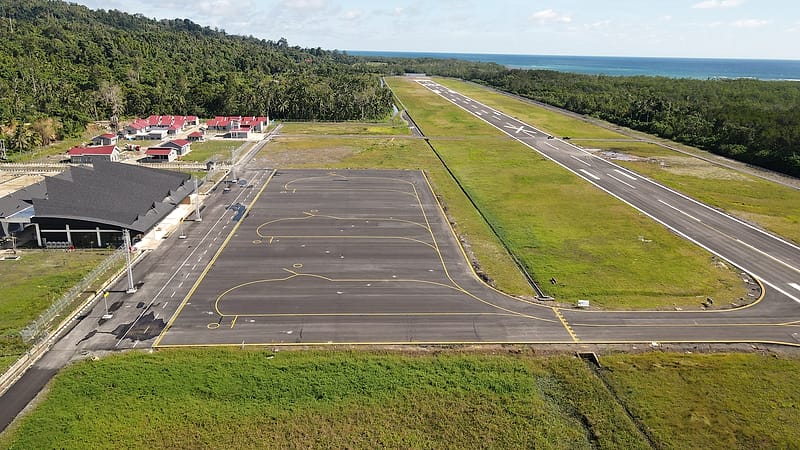
The trap is the surface-level Class E area attached to a small airport with no tower, no terminal and nothing visible from the road. Nothing on the ground signals that the airspace above a neighborhood reaches down to the grass.
Getting authorization
The system works against a published grid. Each square around a participating facility carries a maximum altitude at which drone flight may be automatically approved — 400, 200, 100 or zero feet. Request a flight at or under that number and approval is effectively immediate. Request above it and the automated route is unavailable.
The process in practice:
- Identify the exact launch point and the area the flight will cover, on a current map.
- Read the published ceiling for every grid square the flight will enter, not only the first.
- Submit the request through an approved provider, for a defined window.
- Carry the authorization, with its number and its limits, during the flight.
- Check for temporary restrictions immediately before launching.
Authorization is granted for a time window as well as an altitude, and both are conditions. A flight that runs past its window is unauthorized for the remainder even though nothing about the location changed.
The authorization requirement is not a feature of the certificated rules. It is one of the conditions of the recreational exception as well, and it is the condition recreational flyers most often miss.
The ceiling, the structure exception, and who gives way
Airspace authorization answers where a flight may happen. Two further limits decide how it is flown, and both are routinely conflated with it.
The first is the altitude rule. A small unmanned aircraft is held to four hundred feet above the ground, with one exception: it may go higher while remaining within four hundred feet of a structure, measured laterally, and no more than four hundred feet above that structure's uppermost limit. The exception exists so that a tower, a stack or a tall building can be inspected from top to bottom. What it does not do is raise an airspace ceiling. An operator inspecting a two-hundred-foot antenna in a grid square published at one hundred feet is limited to one hundred feet, because the authorization and the altitude rule are separate constraints and the flight has to satisfy both. Reading the structure exception as a general permission to climb is one of the more common ways a careful operator becomes an unauthorized one.
The second is right of way. An unmanned aircraft yields to every other aircraft, without qualification and regardless of who arrived first or who holds what approval. The practical obligation is to descend or land when manned traffic appears rather than to hold position and expect to be seen, and an authorization number offers no protection against a hazard created by doing otherwise. Near a towered field the two rules interact directly: the traffic the authorization anticipates is precisely the traffic that has priority.
When the ceiling is zero
A published zero means the facility has determined that no drone operation in that square can be automatically approved. It usually marks the approach and departure corridors, where manned traffic is lowest.
The remaining route is a further coordination request, submitted well in advance and assessed individually. It is a genuine process with genuine approvals, but it is slow, it requires an operational justification, and near a busy corridor the answer is frequently no. Operators who depend on flying in such a location — surveyors, roofers, inspectors — plan around the constraint rather than against it, either by scheduling with the facility or by working the parts of the site that fall outside the zero squares.
Restrictions that override everything
Temporary flight restrictions sit on top of the airspace structure and beat any authorization already in hand. They appear around stadium events, wildfire operations, disaster response, presidential movement and security events, sometimes with only hours of notice.
A second layer is permanent rather than temporary. Standing security restrictions surround military installations, certain federal facilities and a number of correctional institutions, and unlike a temporary restriction they do not lapse and are not announced before a flight — they simply exist, and they are published in the same charting products that carry the airspace classes. They are also the restrictions least likely to be discovered by an operator who checks only for notices. The stadium restriction is the temporary one that catches ordinary flyers most often: it typically extends three nautical miles around the venue to three thousand feet, from an hour before an event until an hour after, and it applies to major league, top-tier collegiate and motor racing events without any announcement at the gate. Because most aircraft now broadcast an identifying message continuously, an incursion into either layer is attributable to a specific operator after the fact rather than only in the moment.
The two that catch ordinary flyers are sporting events, where a restriction commonly surrounds the venue before and after the event, and wildfire operations, where flying into the restriction can ground firefighting aircraft. The consequences in the second case are treated far more seriously than an ordinary airspace incursion, and penalties in that category are at the top of the range.
Planning the operation around the airspace
For anyone flying regularly, the useful habit is to invert the planning order: start from the airspace and choose the operating position, rather than choosing the position and hoping for authorization. Class G is where most work can happen without a request, and it is far more available than the map's density of controlled areas suggests.
Where a job genuinely requires controlled airspace — a building near an airport, an inspection under a departure path — build the authorization into the schedule rather than the morning of, keep a copy of the approval with the aircraft, and remember that a waiver for a different limit does not carry an airspace authorization with it. The two are separate permissions, granted through separate processes, and an operation can easily need both. Residents on the ground have their own route into the same airspace question, and it runs through a different office entirely — a noise complaint is handled by the airport operator and the regulator rather than by anyone who issues authorizations.
Sources
- eCFR — 14 CFR 107.41, Operation in Certain Airspace
The prohibition on operating in controlled airspace without prior authorization.
- FAA — UAS Facility Maps
The published altitude ceilings that automated authorization is granted against.
- FAA — Airspace Authorizations
How authorization and further coordination requests are submitted and assessed.
- eCFR — 14 CFR Part 71, Designation of Class A, B, C, D and E Airspace Areas
How each class of controlled airspace is designated and described.
- FAA — Temporary Flight Restrictions
The live list of restrictions that override an existing authorization.
- Cornell Legal Information Institute — 49 U.S.C. 44809
The recreational exception, which carries the same authorization condition.
Questions readers ask
How far from an airport does controlled airspace reach?
There is no single distance. Class D airspace commonly extends about four nautical miles from a towered field, Class C reaches further in a shelved shape, and Class B is larger still. Surface-level Class E can extend well beyond a small airport with no tower at all. Distance is the wrong question — check the airspace class at your exact launch point on a current map.
Does the automated authorization cover the whole flight?
It covers a specific grid square, up to a specific altitude, during a specific window. Crossing into an adjacent square with a lower published ceiling is outside the authorization even though the flight never landed. Plan the flight against the map rather than requesting authorization for the takeoff point and improvising from there.
What if the published ceiling for my location is zero?
Automated authorization is unavailable, and the only route is a further coordination request submitted well in advance. These are assessed individually against the operational impact on the facility, they take weeks, and refusals are common near approach and departure paths. For most operators the practical answer is to move the operation rather than wait on the request.