Boating Under the Influence and Implied Consent on Water
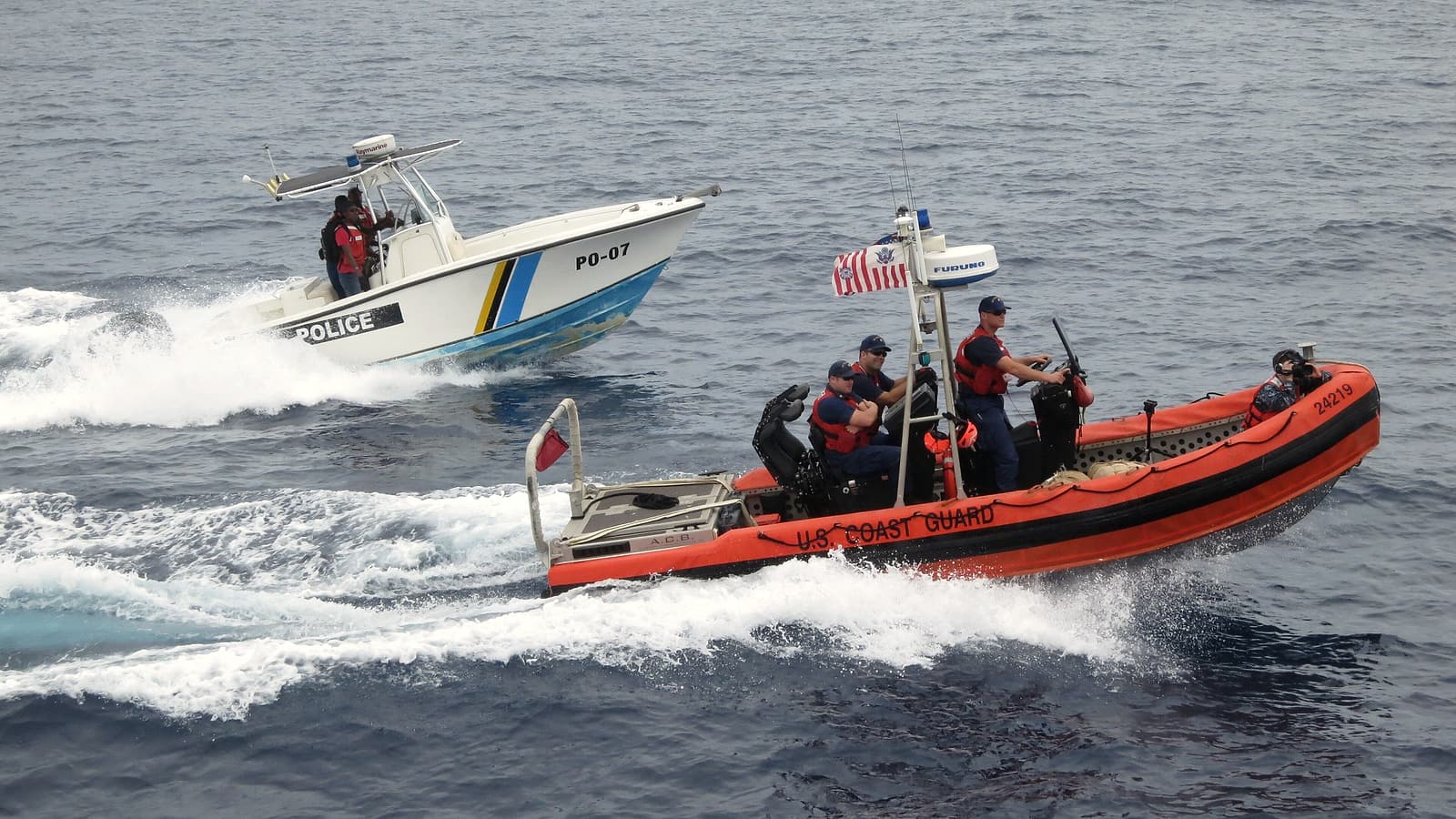
There is no probable cause requirement for stopping a boat. Officers may board for a safety inspection at any time, without suspicion — which is why impairment enforcement on the water begins in a place that road enforcement never can.
What this report covers
- Officers may board a vessel for a documentation and safety inspection without suspicion of any offense.
- The impairment threshold matches the driving standard in most states, and impairment by any substance counts.
- Implied consent statutes attach penalties to refusal, including registration and operating consequences.
- A federal regulation applies on waters subject to federal jurisdiction, alongside state law.
- Conviction can affect a driving license in many states, and a driving conviction can affect boating privileges.
Impairment enforcement on the water begins from a position that has no equivalent on the road. An officer may board a vessel to check documentation and safety equipment without any suspicion that anything is wrong. Everything else follows from what the boarding reveals.
Why the stop is different
Vessel boarding authority is long-standing and broad. It exists so that documentation, safety equipment and pollution requirements can be verified, and it does not depend on the officer having grounds to suspect an offense.
In practice the sequence is:
- The vessel is stopped for a documentation and equipment inspection.
- The officer boards, checks registration and the required equipment.
- Observations during the inspection — odor, coordination, speech, containers — supply grounds to investigate impairment.
- Field tests follow, adapted for a moving deck, then a breath or blood test.
Enforcement is layered. State conservation and marine patrol officers enforce state law; federal officers enforce the federal regulation on waters subject to federal jurisdiction; and on many waterways both are present. An operator can face state charges, federal penalties, or both from a single incident.
The standard, and what counts as operating
Most states apply the same threshold used for driving, and impairment by any substance — prescription medication included — is within the offense. The federal regulation sets its own threshold for vessels subject to it.
What counts as operating is broader than most boaters assume. It generally covers being in actual physical control of a vessel underway, which can include drifting with the engine off, being anchored with the engine running, or being at the helm while someone else steers. Sitting at anchor with the engine off and the key stowed is the safest position, and even that varies by state.
Sun, wind, engine noise, vibration and dehydration produce fatigue and disorientation that compound alcohol's effect — the phenomenon regulators call boater's hypnosis. An operator who would be under the threshold on land can present as plainly impaired after six hours on the water, and casualty data has treated impairment as a leading contributing factor for decades.
Testing on a moving deck
The roadside tests officers rely on were developed and validated for a person standing on stable ground. A deck that is pitching, an operator who has spent six hours in sun and engine noise, and footwear designed for wet surfaces together make the walk-and-turn and the one-leg stand close to worthless, and challenges to them on the water succeed more often than they do on the road.
Enforcement adapted rather than abandoned the exercise. Marine officers commonly use a seated battery administered aboard: a hand-pat sequence, a palm-pat with counting, finger-to-nose, and a recitation task, none of which depend on balance. Gaze nystagmus is used afloat as well, though the officer's own platform is moving while the observation is made. Where conditions allow, the vessel is brought alongside and the tests are repeated ashore, which is why a boarding that begins on open water frequently ends on a dock.
Chemical testing raises a difficulty road enforcement does not have. Evidential breath instruments are rarely carried aboard a patrol vessel, so an operator is transported to a shore facility or a station, and the interval between the observation and the reading can run to an hour or more. The gap cuts both ways. It opens an argument about what the reading actually establishes about the moment of operation, and it is also why officers document what they saw aboard in such detail — those notes are what remains if the reading is excluded.
Implied consent and refusal
Nearly every state applies an implied consent regime to vessel operation: by operating on the state's waters, the operator is deemed to consent to testing where an officer has reasonable grounds. Refusal is not free.
| Consequence of refusal | Common position |
|---|---|
| Civil penalty | Assessed separately from any criminal case |
| Suspension of vessel operating privilege | Frequent, for a fixed period |
| Effect on driving license | In several states, directly |
| Use at trial | Refusal admissible in many states |
| Prosecution continues | Yes — refusal does not prevent it |
The practical consequence is that refusal usually leaves an operator facing the prosecution anyway, plus the refusal penalty, plus an evidential inference. It is a decision made under pressure and it very rarely improves the position.
What a conviction carries
First offenses are typically misdemeanors carrying fines, possible short custody, a boating safety course and suspension of the operating privilege. Escalation follows the pattern familiar from driving law: repeat offenses become felonies in many states, and an offense causing serious injury or death is prosecuted as a serious felony with custodial sentencing.
Two consequences reach beyond the water. The cross-over with driving privileges is the significant one, because in many states a vessel conviction suspends or counts against the driving license. And the negligent operation provisions supply a separate route: an operator who was not over the threshold but was operating in a manner endangering others can be penalized for that alone, which is how incidents with no test result still produce a charge.
The suspension of the operating privilege usually runs on a separate administrative track from the prosecution, with its own notice, its own short deadline to request a hearing — commonly measured in days rather than weeks — and its own lower standard of proof. An operator who concentrates on the criminal case and lets that deadline pass can be acquitted of the offense and still lose the privilege for the full period, because the two proceedings decide different questions and neither is bound by what the other concludes.
After an incident
Where a collision or injury is involved, obligations attach immediately: render assistance, exchange identification with the other vessel, and report the casualty within the period the rules specify — reporting duties are triggered by injury, death, disappearance or damage above a threshold, and missing the window is a separate offense.
Fault for the collision itself is a distinct question decided under the navigation rules, and impairment does not by itself establish it. Insurers treat the two separately as well: a policy may exclude cover for loss occurring while the operator was intoxicated, which turns a marine claim into a personal one at exactly the wrong moment.
The registration side of the encounter matters too. An officer who has boarded checks the vessel’s papers as a matter of routine, and a registration that no longer matches the state of principal use turns one investigation into two.
Sources
- eCFR — 33 CFR Part 95, Operating a Vessel While Under the Influence
The federal standard, the intoxication threshold and the enforcement provisions.
- Cornell Legal Information Institute — 46 U.S.C. 2302, Penalties for Negligent Operations
Negligent and grossly negligent operation, including operation while intoxicated.
- Cornell Legal Information Institute — 14 U.S.C. 522, Law Enforcement
The boarding and inspection authority that underlies enforcement on the water.
- U.S. Coast Guard — Boating Safety Division
State-by-state summaries of impairment law and implied consent provisions.
- National Transportation Safety Board — Recreational Boating Safety
Casualty analysis identifying impairment as a leading contributing factor.
- Cornell Legal Information Institute — Implied Consent
The doctrine underlying testing statutes and the consequences of refusal.
Questions readers ask
Can an officer stop my boat without any reason?
For a documentation and safety inspection, essentially yes. The authority to board vessels for inspection has long been treated differently from the rules governing vehicle stops on land, and no individualized suspicion is required. What follows is ordinary: if the officer forms a reasonable suspicion of impairment during a lawful boarding, the investigation proceeds from there.
What happens if I refuse a breath test on the water?
Most states have an implied consent statute for vessel operation, so refusal carries its own consequence — commonly a civil penalty and a suspension of the privilege to operate a vessel, and in several states an effect on the driving license as well. Refusal is also admissible in the prosecution in many states, which means it rarely improves the position it is intended to protect.
Does a boating conviction affect my driver's license?
In many states, yes. Some count a vessel conviction as a prior offense for later driving prosecutions, some suspend driving privileges directly, and some run the two systems separately. The linkage is state-specific and it is the consequence most operators do not anticipate, because it converts a single afternoon on the water into a transport problem for a year.